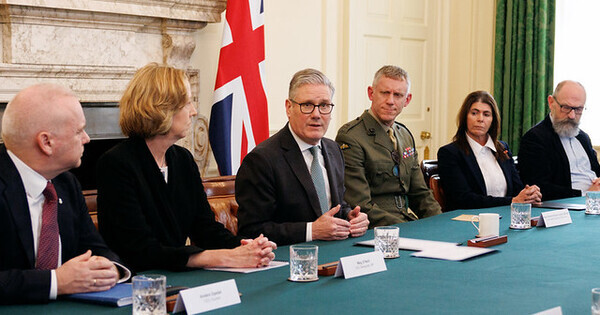
Prime Minister says he is 'sick and tired' of energy bills fluctuating due to fossil fuel volatility, as he reiterates need to ramp up domestic clean power capacity
Sustainable construction is shifting from ambition to delivery, with whole life carbon, embodied carbon and life cycle cost now shaping decisions across infrastructure, buildings and climate resilience.
The UK’s Lower Thames Crossing shows the direction of travel, as National Highways works to connect low-carbon plant with dependable hydrogen supply. JCB’s hydrogen combustion route and Toyota’s fuel cell approach point to a maturing market where low carbon design depends as much on refuelling infrastructure as machinery innovation.
Decarbonising the built environment is also moving into operational heat and data. The National Geothermal Centre’s estimate that the UK could unlock 10GW of geothermal heat by 2050 strengthens the case for renewable heat in net zero carbon buildings, provided policy, planning and finance align. In Europe, efforts to make renovation data usable by 2027 underline the importance of lifecycle assessment, building lifecycle performance and whole life carbon assessment. Retrofit programmes need verified information on fabric, energy use, sequencing and embodied carbon in materials if sustainable building design is to move beyond targets.
Climate adaptation is becoming inseparable from environmental sustainability in construction. The £249m Bridgwater Tidal Barrier reflects growing investment in green infrastructure designed for rising water levels and rising project costs. Drought-related subsidence shows that housing resilience must be treated as part of sustainable building practices, not a separate risk category. Extreme heat is already damaging construction productivity, with MSCI estimating labour losses equivalent to around 2% of global GDP.
The sector now faces linked pressures: cleaner construction sites, energy-efficient buildings, low embodied carbon materials and assets capable of withstanding a harsher climate. Copper supply constraints add further complexity to electrification, strengthening the need for resource efficiency in construction, circular economy principles and circular construction strategies. BREEAM, BREEAM v7, environmental product declarations (EPDs), sustainable material specification and eco-design for buildings are becoming practical tools for reducing the carbon footprint of construction and supporting net zero whole life carbon. Sustainability is no longer a procurement preference; it is becoming the core constraint on how construction is planned, financed, built and maintained.
Whole Life Carbon is a platform for the entire construction industry—both in the UK and internationally. We track the latest publications, debates, and events related to whole life guidance and sustainability. If you have any enquiries or opinions to share, please do
get in touch.
Let's chat!
WLC Assistant
Ask me about sustainability
Hi! I'm your Whole Life Carbon assistant. I can help you learn about sustainability, carbon assessment, and navigate our resources. How can I help you today?