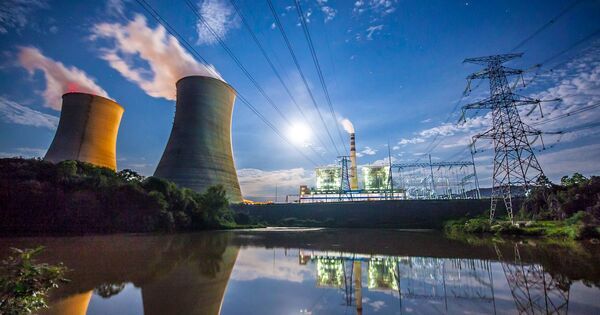
New report reveals momentum behind new nuclear projects is building, but industry faces significant financing, supply chain, and skills challenges if it is deliver on target to triple capacity by 2050
The strongest signals in sustainable construction this week expose the tension between net zero ambition and delivery risk. Cheshire East has become the fourth council to oppose the £5bn Peak Cluster CO2 pipeline, a project positioned as critical to decarbonising cement and lime. The decision shows that net zero carbon infrastructure still depends on planning consent, landscape acceptance and public confidence. For heavy industry, carbon capture can support carbon footprint reduction, yet the carbon footprint of construction, land disruption and long-term operating impacts must be tested through whole life carbon assessment, lifecycle assessment and credible life cycle cost analysis.
At building level, electrification is moving from policy concept to market proposition. Schneider Electric and Apple’s smart thermostat points to tighter integration between consumer technology, energy-efficient buildings and domestic demand management. Octopus Energy’s planned cooling add-on for heat pumps is more than a comfort feature. Overheating is becoming a core risk for sustainable building design in UK housing, making low carbon design central to both winter heating and summer resilience. Net zero carbon buildings will be judged on building lifecycle performance, grid interaction, occupant health and operational efficiency, not only annual energy use.
The Torcross rock defence scheme, backed by £20m and involving tens of thousands of tonnes of imported stone, highlights the difficult material choices behind climate adaptation. Coastal protection is essential green infrastructure, but it can carry high embodied carbon in materials and a significant environmental impact of construction. The case reinforces the need for sustainable material specification, low embodied carbon materials, environmental product declarations (EPDs) and resource efficiency in construction. Resilience schemes must prove they are proportionate, durable and aligned with net zero whole life carbon, not simply necessary in the short term.
These developments show environmental sustainability in construction moving beyond narrow energy metrics. The sector must connect whole life carbon, embodied carbon, circular economy principles and life cycle thinking in construction with planning, procurement and asset performance. Circular economy in construction, end-of-life reuse in construction and circular construction strategies will become more important where major infrastructure and coastal defence rely on carbon-intensive inputs. Clients pursuing BREEAM, preparing for BREEAM v7 and demanding green building products will expect clearer evidence that low carbon construction materials, renewable building materials and green building materials deliver measurable value.
Sustainable building practices now require sharper trade-offs. Eco-design for buildings, low-impact construction and sustainable architecture must account for future climate risks, not just present compliance. The winners in green construction and eco-friendly construction will treat planning consent, embodied carbon, operational emissions, life cycle cost and occupant comfort as one integrated challenge. This is the practical frontier of decarbonising the built environment: carbon neutral construction where possible, low carbon building performance as standard, and sustainable urban development shaped by evidence rather than aspiration.
Whole Life Carbon is a platform for the entire construction industry—both in the UK and internationally. We track the latest publications, debates, and events related to whole life guidance and sustainability. If you have any enquiries or opinions to share, please do
get in touch.
Let's chat!
WLC Assistant
Ask me about sustainability
Hi! I'm your Whole Life Carbon assistant. I can help you learn about sustainability, carbon assessment, and navigate our resources. How can I help you today?