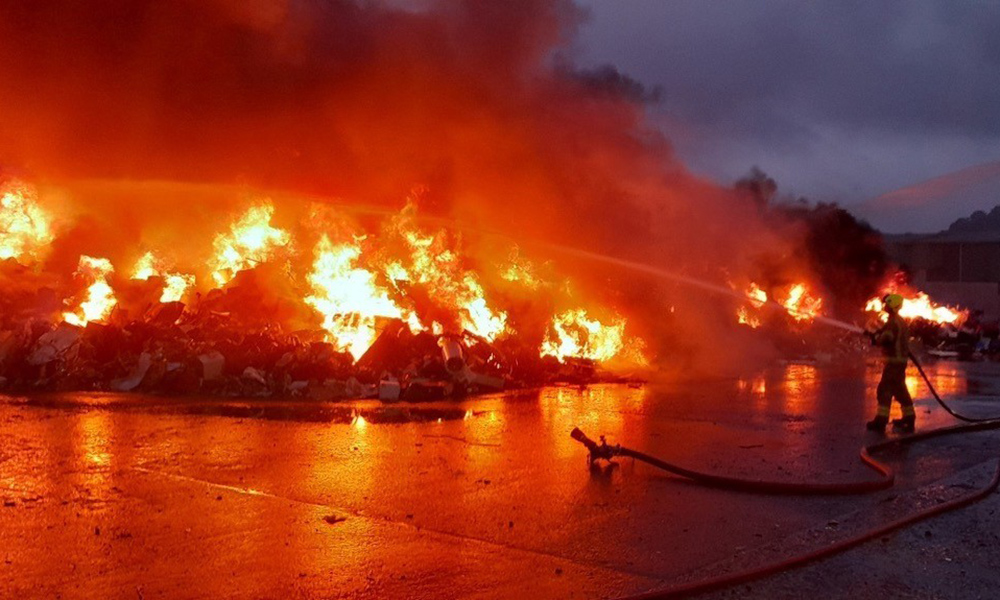
Parliamentarians, councils and industry representatives have met at Westminster to discuss the growing number of fires linked to discarded lithium-ion batteries, amid calls for stronger regulation and government support. A cross-sector group of parliamentarians, local government representatives and industry figures met at the House of Commons last week to discuss the increasing number of fires caused by improperly disposed lithium-ion batteries. The round-table was sponsored by Alistair Strathern and co-hosted by North London Waste Authority and Electrical Safety First. Attendees included representatives from waste management companies, the third sector, retail and the London Fire Brigade. Lithium-ion batteries, commonly found in
Sustainable construction is shifting from reputational signalling to risk management, with cost, carbon, resilience and delivery now inseparable. The strongest market signal is the growing demand for whole life carbon, embodied carbon and life cycle cost data at the earliest design stage. Clients, developers and public bodies increasingly expect whole life carbon assessment, lifecycle assessment and transparent evidence on the carbon footprint of construction before schemes move forward.
Andy Burnham’s proposal to scrap standing charges on gas bills could strengthen the economics of heat pumps and accelerate demand for energy-efficient buildings, low carbon building upgrades and net zero carbon buildings. BESA’s Downing Street manifesto reinforces the same point from the supply chain: housing targets will fail on sustainability if building-services capacity, skills and performance are not treated as core infrastructure.
Digital design platforms are becoming central to sustainable building design, sustainable design and low carbon design because they can expose embodied carbon in materials, life cycle cost and building lifecycle performance before waste is locked in. This supports eco-design for buildings, sustainable material specification, environmental product declarations (EPDs), low embodied carbon materials and low carbon construction materials.
Climate adaptation is now part of environmental sustainability in construction. Drought risk extending into 2027 strengthens the case for water-efficient design, green infrastructure, resource efficiency in construction and resilient material choices. Northern Ireland’s risk of missing energy targets shows that delay weakens investment, supply chains and regional competitiveness.
Green construction is becoming the commercial baseline. The direction of travel is clear: net zero whole life carbon, BREEAM, BREEAM v7, circular economy, circular economy in construction, end-of-life reuse in construction and circular construction strategies are moving from specialist language into mainstream delivery.
Whole Life Carbon is a platform for the entire construction industry—both in the UK and internationally. We track the latest publications, debates, and events related to whole life guidance and sustainability. If you have any enquiries or opinions to share, please do
get in touch.
Let's chat!
WLC Assistant
Ask me about sustainability
Hi! I'm your Whole Life Carbon assistant. I can help you learn about sustainability, carbon assessment, and navigate our resources. How can I help you today?