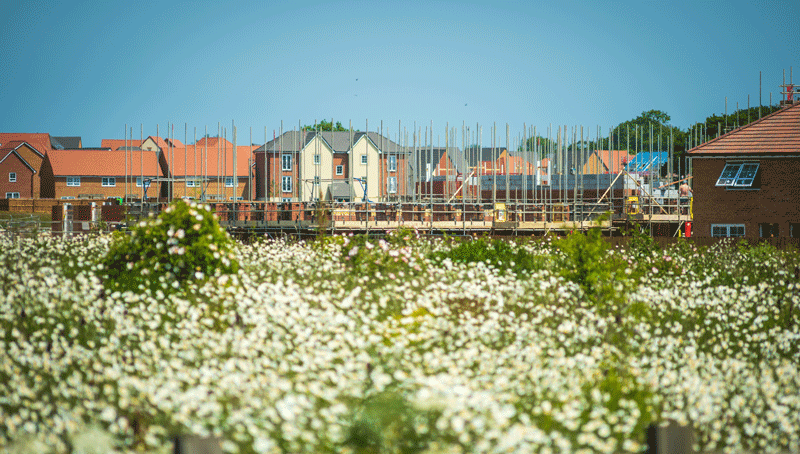
The UK Government is hosting a snap vote on dozens of changes to the Planning and Infrastructure Bill, which it has been told will weaken nature protections in its current form. Nature NGOs argue that this approach has left no time for proper legislative scrutiny.
Sustainable construction is moving from intent-led specification to measurable performance, carbon pricing and climate-risk management. The reported move to link the UK and EU emissions trading systems could create a clearer market signal for manufacturers, developers and clients seeking whole life carbon reduction. A more coherent carbon-price framework would strengthen the business case for low carbon construction materials, lower-carbon steel and cement, and more rigorous sustainable material specification, particularly where embodied carbon in materials dominates the carbon footprint of construction.
The policy shift reinforces the need for whole life carbon assessment, lifecycle assessment and life cycle thinking in construction across design, procurement, operation and end-of-life planning. Net zero carbon buildings will increasingly depend on evidence-based low carbon design, transparent environmental product declarations (EPDs), and credible pathways towards net zero whole life carbon. BREEAM, BREEAM v7 and other performance frameworks are likely to gain greater relevance as clients demand proof that sustainable building design is delivering against regulation, finance and resilience expectations.
New research suggesting home insulation schemes may underestimate heat loss exposes a serious gap between modelled and actual building lifecycle performance. Energy-efficient buildings cannot be judged by design assumptions alone. Retrofit programmes need better installation quality, monitoring and verification if they are to deliver carbon footprint reduction, lower bills and reliable life cycle cost outcomes. Fabric-first strategies remain central to green construction, but only when real-world performance matches specification.
Climate adaptation is becoming a core part of environmental sustainability in construction. A national research network on property-level flood resilience, a new government flood-advice service and commitments to protect 200,000 properties show that sustainable building practices must address flood, heat and water stress together. Urban greening, active travel and public cooling schemes backed by Bupa and the Norman Foster Foundation point to a wider role for green infrastructure, sustainable urban development and sustainable architecture in protecting public health.
The sector’s challenge is now integrated rather than isolated: cut embodied carbon, improve retrofit reliability, reduce operational energy demand, apply circular economy in construction principles and design for a harsher climate. Circular construction strategies, resource efficiency in construction, renewable building materials, green building products and end-of-life reuse in construction are moving from optional enhancements to practical requirements. Eco-design for buildings, low-impact construction and carbon neutral construction will define credible progress in decarbonising the built environment.
Whole Life Carbon is a platform for the entire construction industry—both in the UK and internationally. We track the latest publications, debates, and events related to whole life guidance and sustainability. If you have any enquiries or opinions to share, please do
get in touch.
Let's chat!
WLC Assistant
Ask me about sustainability
Hi! I'm your Whole Life Carbon assistant. I can help you learn about sustainability, carbon assessment, and navigate our resources. How can I help you today?