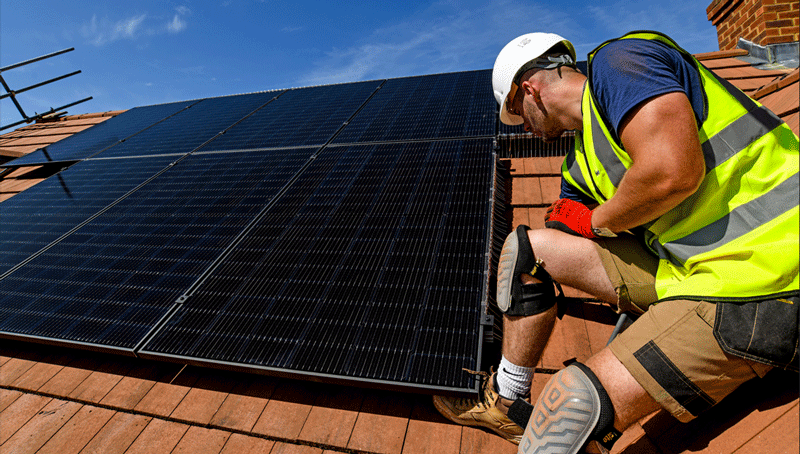
The Advertising Standards Authority (ASA) has ruled that a radio advert for EDF’s solar panels and battery storage systems for homes was likely to mislead the general public.
Sustainable construction is moving from ambition to delivery, with the COP31-backed Antalya Compact for Energy Efficient Buildings positioning electrification, building decarbonisation and net zero carbon buildings as infrastructure policy rather than voluntary corporate commitments. The agenda now centres on whole life carbon, embodied carbon and credible whole life carbon assessment, as governments, clients and developers seek measurable routes to net zero whole life carbon across the built environment.
The NBS Sustainable Futures Report 2026 highlights a persistent delivery gap in environmental sustainability in construction: the industry can articulate sustainability goals, but still struggles to measure lifecycle assessment, building lifecycle performance and life cycle cost consistently across projects, supply chains and completed assets. This is becoming a commercial issue for procurement, insurance and regulation, especially as frameworks such as BREEAM and BREEAM v7 place greater pressure on evidence-based sustainable building design, low carbon design and verifiable carbon footprint reduction.
Circular economy policy is gaining weight as WRAP estimates that a stronger UK circular economy could unlock £93bn by 2035. For construction, the implication is significant. Circular economy in construction, resource efficiency in construction, end-of-life reuse in construction, sustainable material specification and circular construction strategies are becoming central to productivity, not peripheral design choices. Design for disassembly, materials passports, environmental product declarations (EPDs), secondary materials markets and better data on embodied carbon in materials will be critical to reducing the carbon footprint of construction.
Site-level change remains essential. Smaller contractors are being urged to cut diesel use, showing that decarbonising the built environment depends on plant, logistics, energy management and low-impact construction as much as landmark sustainable architecture. Low carbon construction materials, low embodied carbon materials, renewable building materials, green building products and eco-design for buildings are increasingly important, but routine sustainable building practices across ordinary assets will determine whether green construction, eco-friendly construction and carbon neutral construction become mainstream.
High-spec urban schemes such as Hogan Lovells’ new London headquarters show that premium developments can combine sustainable design, energy-efficient buildings and low carbon building performance. The wider test is whether these standards spread beyond flagship projects into everyday construction, where most emissions, waste and opportunities for whole life carbon reduction are concentrated.
Whole Life Carbon is a platform for the entire construction industry—both in the UK and internationally. We track the latest publications, debates, and events related to whole life guidance and sustainability. If you have any enquiries or opinions to share, please do
get in touch.
Let's chat!
WLC Assistant
Ask me about sustainability
Hi! I'm your Whole Life Carbon assistant. I can help you learn about sustainability, carbon assessment, and navigate our resources. How can I help you today?