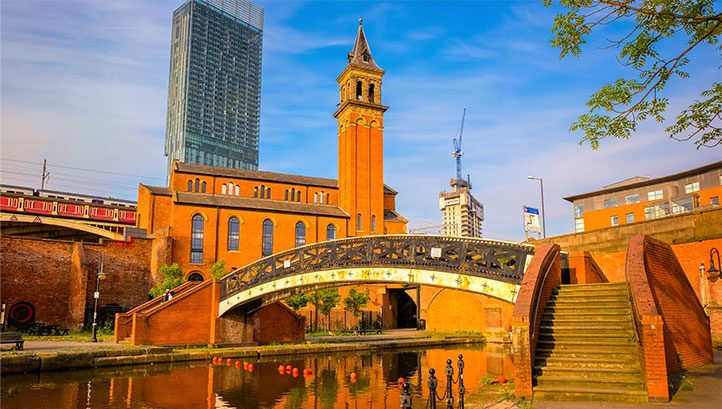
The second net-zero transition regional roundtable, alongside Lloyds Corporate & Institutional, turns the sustainability spotlight on North-West England
The week’s sustainable construction agenda shows a built environment under growing pressure to prove whole life carbon outcomes, not just deliver visible low-carbon upgrades. IRENA’s warning that electrification and renewables are progressing too slowly has direct implications for net zero carbon buildings: operational emissions cannot fall at the required pace without cleaner power, low-carbon heat and stronger retrofit policy. Speculation over cuts to the UK Boiler Upgrade Scheme raises concern for heat-pump deployment, life cycle cost planning and the practical delivery of low carbon building strategies across existing homes.
Flood resilience is becoming a mainstream requirement for sustainable building design. A £1.6m programme has installed property-level flood measures in 100 East Midlands homes affected by Storm Babet and Storm Henk, underlining the shift from reactive repair to climate adaptation. This is environmental sustainability in construction at household scale: upgraded thresholds, resistant materials and resilient detailing are now central to building lifecycle performance, sustainable building practices and long-term asset protection.
Cooling demand is another test for sustainable design. International controls on refrigerant gases show that eco-design for buildings must address overheating, shading, ventilation, fabric performance and efficient systems before relying on air-conditioning. Poorly designed glazed buildings fitted with high-GWP refrigerants would increase the carbon footprint of construction and undermine net zero carbon targets. Energy-efficient buildings need low carbon design from the outset, supported by lifecycle assessment and whole life carbon assessment rather than equipment-led fixes.
Europe’s reported surplus of waste-incineration capacity is a warning for the circular economy in construction. Treating waste as fuel can weaken incentives for reuse, recovery and sustainable material specification at the point when the sector must cut embodied carbon in materials. Low embodied carbon materials, environmental product declarations (EPDs), renewable building materials and green building products will be critical to reducing embodied carbon and supporting credible circular construction strategies.
The direction for sustainable construction is clear: electrify heat, design for flood and heat risk, measure whole life carbon, reduce embodied carbon, and prioritise resource efficiency in construction. The next phase of green construction depends on whole life carbon assessment, circular economy principles and life cycle thinking in construction becoming routine requirements, aligned with frameworks such as BREEAM and BREEAM v7. Net zero whole life carbon will be achieved only when low carbon construction materials, end-of-life reuse in construction and carbon footprint reduction are embedded into every brief, procurement decision and building performance plan.
Whole Life Carbon is a platform for the entire construction industry—both in the UK and internationally. We track the latest publications, debates, and events related to whole life guidance and sustainability. If you have any enquiries or opinions to share, please do
get in touch.
Let's chat!
WLC Assistant
Ask me about sustainability
Hi! I'm your Whole Life Carbon assistant. I can help you learn about sustainability, carbon assessment, and navigate our resources. How can I help you today?